
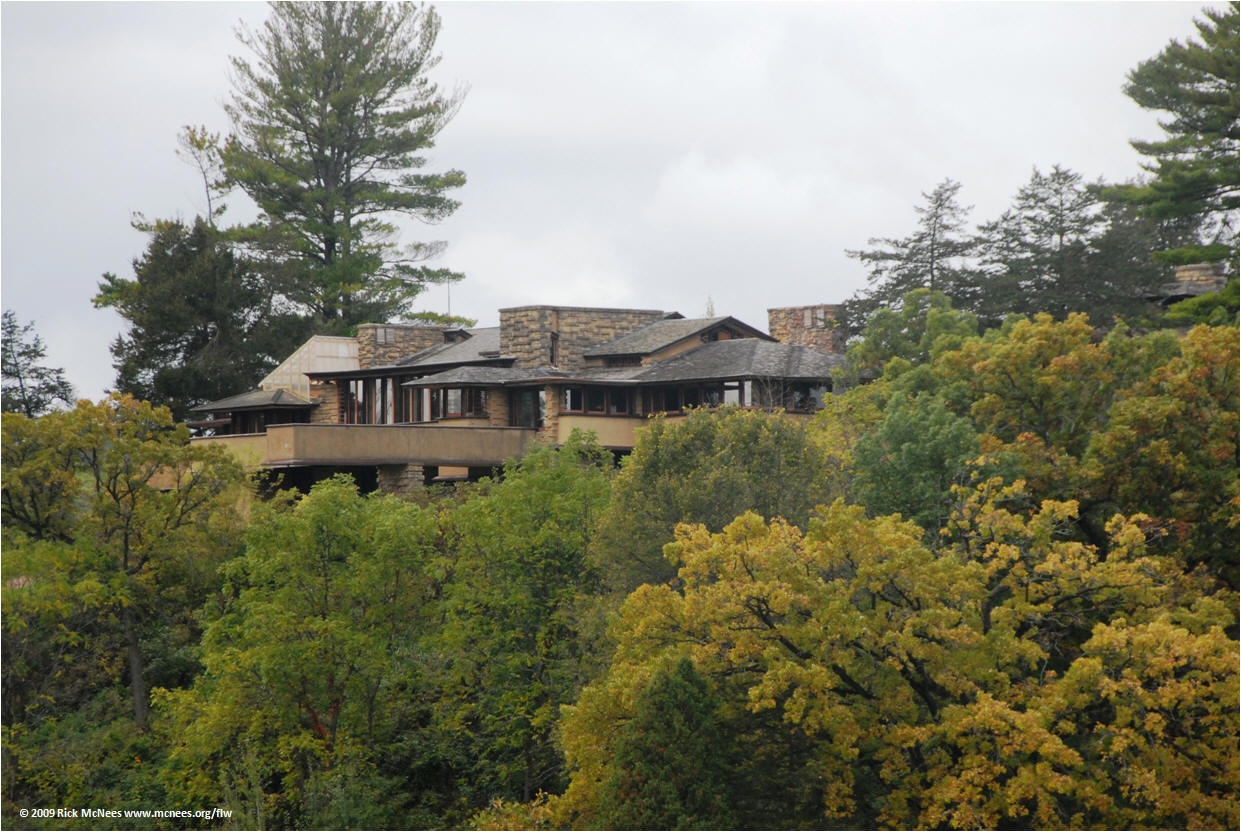
The Man & His Work
Frank Lloyd Wright
1867 – 1959 · Architect, visionary, provocateur. The man who taught America what a building could be.
Biography
A Life in Architecture
Frank Lloyd Wright was born on June 8, 1867, in Richland Center, Wisconsin. Over a career spanning more than seven decades, he designed 1,114 structures — 532 of which were completed — and fundamentally transformed the way the world thinks about buildings, space, and the relationship between human beings and the natural world.
He was a man of extraordinary contradictions: a champion of democratic ideals who lived extravagantly; a prophet of simplicity who designed with breathtaking complexity; a man who suffered devastating personal tragedies and yet produced some of his greatest work in his final decades.
He died on April 9, 1959, at the age of 91 — just months before the Guggenheim Museum, his final masterpiece, opened its doors to the world.
"I believe in God, only I spell it Nature."
— Frank Lloyd Wright
Design Philosophy
The Principles Behind the Work
Organic Architecture
Wright believed buildings should grow from their site as naturally as any living thing — shaped by the land, the climate, and the people who inhabit them. No building should fight its environment; it should belong to it.
The Destruction of the Box
Traditional architecture confined people in boxes. Wright broke the box open — eliminating load-bearing walls, merging interior and exterior, and creating flowing spaces that breathe and move.
Truth in Materials
Wood should look like wood. Stone should look like stone. Wright never disguised a material or applied ornament that wasn't integral to the structure. Honesty in construction was a moral as much as an aesthetic principle.
The Usonian Ideal
Wright dreamed of a democratic architecture — beautiful, affordable homes for ordinary American families. His Usonian houses, built from the 1930s onward, were his attempt to make that dream real.
A Life in Time
Timeline
1867
Born in Richland Center
Frank Lloyd Wright is born on June 8 in Richland Center, Wisconsin. His mother, Anna Lloyd Jones, reportedly hung engravings of great cathedrals above his crib, determined to raise an architect.
1887
Arrives in Chicago
Wright moves to Chicago and joins the firm of Adler & Sullivan, where he works under Louis Sullivan — the man he would later call his "Lieber Meister" (dear master).
1893
Opens His Own Practice
After leaving Sullivan's firm, Wright establishes his own studio in Oak Park, Illinois. Over the next decade he develops the Prairie Style — his first great architectural language.
1909
The Prairie Period Peaks
By 1909 Wright has completed dozens of Prairie Style homes, including the Robie House and Unity Temple. He leaves for Europe, publishing the Wasmuth Portfolio — a collection of drawings that electrifies a generation of European modernists.
1911
Taliesin is Born
Wright builds Taliesin on the family land in Spring Green, Wisconsin — a home, studio, and farm that becomes the center of his life and work for the rest of his career.
1935
Fallingwater
At age 68, Wright designs Fallingwater for the Kaufmann family in a single inspired session. The cantilevered house over a waterfall becomes the most celebrated private residence ever built.
1937
Taliesin West
Wright establishes his winter camp in the Sonoran Desert of Arizona, building Taliesin West from desert masonry. It becomes the headquarters of his school and foundation.
1959
The Guggenheim Opens — Wright Dies
The Solomon R. Guggenheim Museum opens on October 21, 1959 — six months after Wright's death on April 9 at age 91. His final masterpiece stands as his enduring farewell to the world.

"No house should ever be on a hill or on anything. It should be of the hill, belonging to it."
— Frank Lloyd Wright
Our Mission
Why Inspired Prairie Exists
Inspired Prairie was created out of a simple conviction: Frank Lloyd Wright's buildings are among the greatest achievements in the history of human civilization, and more people should know about them, visit them, and be moved by them.
We document each site with care — its history, its architectural significance, its current status, and how to visit. We believe that architecture is not a spectator sport. These buildings were made to be inhabited, walked through, and experienced.
Our goal is to be the most thoughtful, accurate, and beautiful guide to Wright's work on the internet — and to inspire at least a few more people to make the pilgrimage.
47
Buildings Documented
and growing
8
UNESCO World Heritage Sites
designated in 2019
13
States Represented
across America
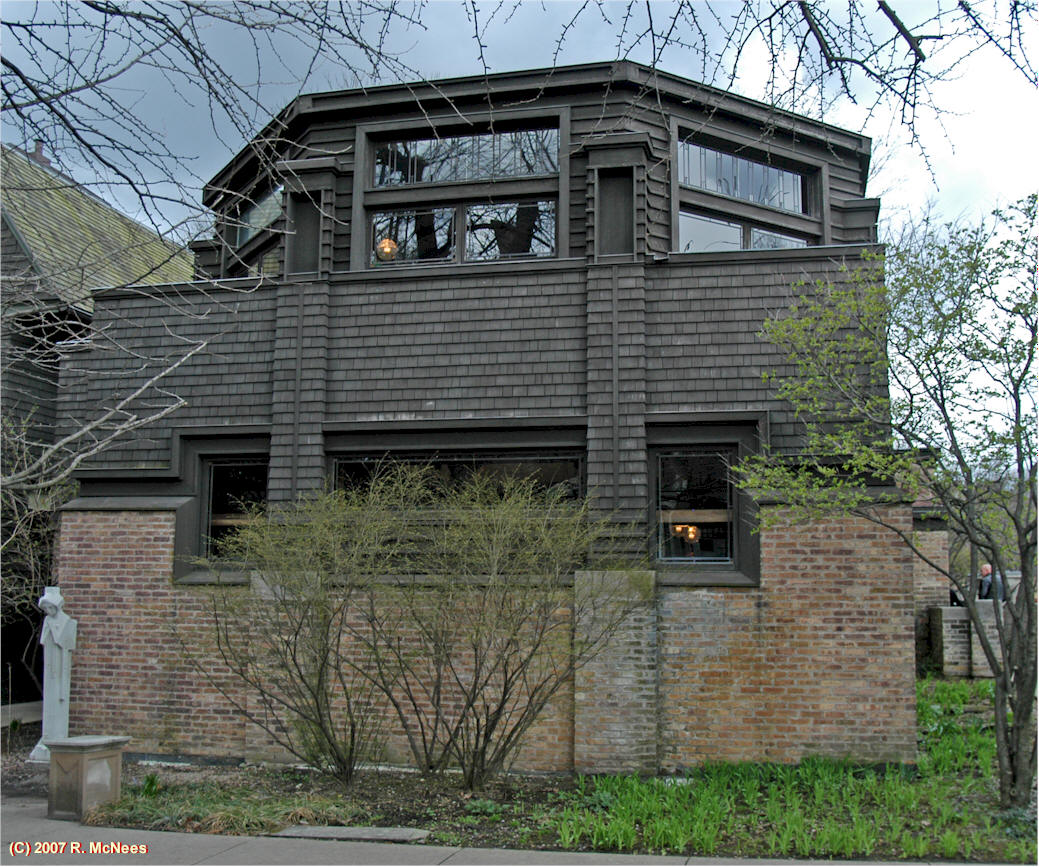
Frank Lloyd Wright Home & Studio, Oak Park, Illinois
Photo © Rick McNees
About the Photographer
Rick McNees
All photography on Inspired Prairie is the work of Rick McNees of Naperville, Illinois — a lifelong student of Frank Lloyd Wright's architecture, a certified docent and interpreter for the Frank Lloyd Wright Preservation Trust, and the author of Rick's Wright-Site, one of the longest-running independent FLW photo archives on the internet.
As a volunteer guide for the Trust, Rick leads public, private, and specialty tours of the Wright Home & Studio at 951 Chicago Avenue in Oak Park — as well as walking tours of the surrounding neighborhood, which contains the highest concentration of Wright-designed buildings anywhere in the world. He also conducts original research on Wright's Prairie Period work.
Rick's Wright-Site (mcnees.org)
Published continuously since 1999, Rick's Wright-Site documents Frank Lloyd Wright structures across Illinois, Pennsylvania, Wisconsin, Arizona, California, New York, and beyond. The site covers Prairie Style, Usonian, Textile Block, and Organic works — with original photography, building histories, and visitor information compiled from decades of first-hand visits. It remains an essential reference for researchers, preservationists, and Wright enthusiasts worldwide.
Visit Rick's Wright-SiteEvery image on this site is used with Rick's permission. His photographs are the visual backbone of Inspired Prairie — without his decades of fieldwork and his generosity in sharing it, this resource would not exist.
Certified Docent & Interpreter
Frank Lloyd Wright Preservation Trust, Oak Park, Illinois
Volunteer Tour Guide & Researcher
FLW Home & Studio · Oak Park Prairie neighborhood walking tours
Rick's Wright-Site
Independent FLW photo archive published online since 1999
150+ Structures Documented
Personal archive spanning Prairie, Usonian, Organic & Textile Block works
Start Exploring
See the Buildings for Yourself
Browse our full collection of documented sites, or open the travel map to plan your visit.